
..........................................................................................................................................................................................................
disconnect
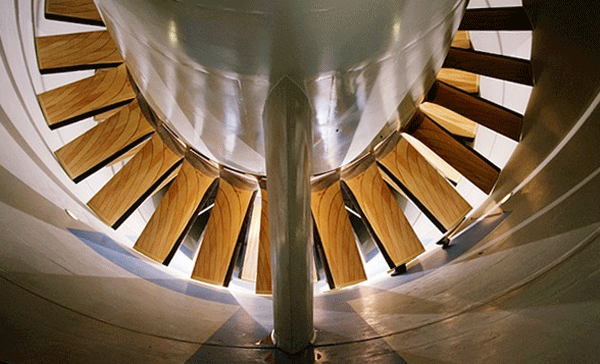
for obvious marketing reasons, road bicycle manufacturers are generally keen to identify their flagship model as the world's fastest bicycle, usually a title that can be held for an all too brief moment in time. though of purely academic interest to most of us, this constitutes bragging rights for even the most corporate of companies, but the question remains as to whether the claim has any validity, and just how you might define it in the first place?
many years ago, when the concept of an aero road bike first reared its ugly head, a manufacturer, which shall remain nameless to spare their blushes, produced a bicycle shortly in advance of a particularly notable bike race, a bicycle they claimed to be several minutes faster than the competition over a specific distance. at the finish line, if memory serves correctly, the first rider home on such a bicycle, arrived in either ninth or tenth place, rather undermining any claims that the bicycle was the world's fastest. unlike motor vehicles, which feature a wide variety of engine power, any claims to the title of fastest bicycle surely depend entirely on who is riding it? to state the glaringly obvious, the rider is the engine.
if we look briefly at the last two grand tours, pogacar, who rides a colnago and seems to favour the y1rs, took the yellow jersey by some considerable margin. that would seem to confirm the colnago as the world's fastest bicycle. but if, for instance, the slovenian had opted to ride the v5rs and still won the jersey, would that effectively depose colnago's designated aero bike, and raise its stablemate to the podium? come the vuelta, with pogacar taking a well-earned holiday, vingegaard, second in the tour, took top spot in madrid. so does that mean his cervelo s5 is the world's fastest bike, or would the presence of tadej stolen the dane's thunder?
and though i'd imagine that victory matters a great deal not only to the two riders mentioned above, does it really mean that much to you or i? for instance, were i to arrive at debbie's a couple of minutes ahead of you, or if you reach the summit of the col du rspb several metres ahead of yours truly, do either of us really care, and would we be bold enough to claim world's fastest bike on that basis? i tend to think not.
my own personal view is that there really is no such things as 'the world's fastest bicycle. there are simply far too many variable factors that might intervene. for instance, out of necessity, i am well-practised in the art of riding in galeforce crosswinds, a skill that, because of your regular place of domicile, you may have had scant reason to perfect. therefore, as we both ride hurriedly towards bruichladdich in a force six gale, the fact that i have learned to be less troubled by crosswinds than you, surely does not infer that i am riding the faster bicycle? left to its own devices, any bicycle is merely an inert collection of carbon, aluminium and a smattering of titanium. unless concerted pressure is applied to the pedals, all of the world's finest road bicycles are going nowhere.
you will, i hope, note that all the scenarios outlined above, involve real world situations; none are set in the mythical online world of watopia, and none involve a wind-tunnel, which, i might point out, is on which the majority of manufacturers base their often spurious claims. to the best of my knowledge, i have never been anywhere near a wind tunnel, so it would be a tad disingenuous to contend that such claims are wholly invalid. but it's possible that they might just be exactly that. in every photo i've witnessed showing a road bicycle in a wind tunnel, not one of them has been at right angles to the turbine fan. yes, the manufacturer will quote the drag-coefficient at various angles, but none i've seen have been at 90 degrees. yet i'm pretty sure we've all, at sometime or other, been faced with just such a sideways blast.
the fallacy, as far as i can see, is in not subjecting those flat, thin tube shapes to a sturdy crosswind; the bicycle may prove particularly slippery when faced with a direct head or tailwind, but that is of no real consequence if those flat tubes result in it being blown off the road, aided and abetted by a wheelset sporting 60mm rims. and what brought on this discussion? learning that a very popular cycling website tested a dozen of reputedly all-out aero bikes in a wind tunnel to learn which was really the fastest amongst them.
though the article filled plenty of pixels, i'd be less than inclined to set store by the result, when the question asked is surely flawed in the first place.
friday 19 september 2025
 ..........................................................................................................................................................................................................
a one-way street

a good friend of mine (thank you james), sent me a link to a youtube video by scottish car clan, in which the presenter, the name of whom i am unaware, advises his audience to seriously consider finding and purchasing a good quality used car from the earlier part of this century, as opposed to investing in 'new'. his reasoning seemed to me, to be particularly sound.
in and around 2010 (his advice, not mine), motor cars had effectively reached the pinnacle of engineering quality, combined with luxury and appropriate technology. cars of that era were not reliant on dealership software and integrated systems. though this would hardly apply to yours truly, vehicles of that vintage could still be worked on by independent and home mechanics; parts are reputedly easily available, and though costs had risen in recent years as more motorists had begun to appreciate in which direction the car industry was heading, they were still at a manageable level.
with the government's mandate that all petrol and diesel production should end in 2030, there's unlikely to be a single manufacturer in the world who does not already have a saleable electric car, a plug-in hybrid, or similar models under development. but all current (pun intended) electric cars rely on lithium-ion batteries, which one manufacturer has advised have an average life-expectancy of approximately ten years. this means that there are going to be many present day purchases that will effectively reach an end-of-life situation in 2035, when the replacement cost of a battery outweighs the value of the car. at present, some manufacturers are quoting £10,000 for a new battery.
but even the vehicles that have yet to transition to electric power have made motorisng considerably more expensive. the scottish car clan presenter cited the example of a new gearbox for a honda crv, which, he said was available for around £450, and which he and many others had the mechanical ability to either fix or replace. as more folks became aware of the impending situation, it might be likely that, in only a few years' time, that price might have risen by a couple of hundred pounds. but it was worth comparing that with the presenter's recent need to replace a wing-mirror on a modern car; with all the associated electronics and sensors, it had cost more than the replacement gearbox for the honda.
so, you might think, even more reasons to be smug and self-congratulatory that we are immune from such ephemera, with both cleated feet firmly planted in the realm of the velocipede. but before that smugness becomes overbearing, take a look at the way the cycle industry has been heading recently. the e-bike has gone from looking like commercial folly, to becoming the mainstay of the industry, lauded from all sides in similar manner to the mountain bike of the 1980s. they too are reliant on lithium-ion batteries, and if you possess just such a bicycle, at some time in the future, it too will require a replacement battery, something that i believe many dealers and manufacturers neglect to point out at time of purchase. e-bike batteries are reckoned to have a useful life of around four years, depending on type of use, and at present can cost a few pounds short of £1,000. that in itself, makes the e-bike seem a tad less economic and pragmatic than many of us originally thought.
i own a colnago c40 from around 1999 which is still perfectly serviceable, and from which i expect to gain at least another fifteen years of use, without having to spend a total of £6,000 over 30 years if i generously allow for a replacement battery every five years (were it even electric in the first place). but that's only e-bikes, which many may be inclined to think serves those right who bought into the whole e-bike world when they could easily have settled for an acoustic bicycle instead.
but once again, i believe that smugness may have to be tempered. there has already been one e-bike maufacturer gone bust, leaving purchasers of its product with the dilemma of where their cycling future lies. that's because the bicycle came with a membership fee, payment of which worked in the same manner as modern software; pay the monthly fee, or (bits of) it stops working. with the so-called internet of things (iot) such systems are easily implemented.
presently, shimano and sram have shifted (pun intended once more), their professional groupsets to electronic and wireless operation. campagnolo has done likewise to an extent, but it's still possible to acquire super-record, record and chorus mechanical groupsets, with still the commendable option of rim brakes. however, it would be naive to think that none of the big three have entirely discounted integrating these systems with the bicycles to which they are outfitted, and pursuing the subscription model. were the latter to become fact, you would rent the groupset of choice, allowing for software and possibly even hardware updates as part of the package. but once again, if you stop paying, the bicycle no longer works.
you might think this to be a poorly considered conspiracy theory, but already, bmw require a subscription on some of their vehicles, just to use the heated seats.
if this seems far-fetched, as long ago as the garmin 800, a gps device could connect to a mobile phone, allowing signals to be sent and received in use. i'm sure i recall a recent release of just such a bicycle computer which featured a sim card, and able to access the mobile phone network directly. it's how smart-meters work. the technology is all there; the rollout is probably sitting on the apple-mac of a marketing department somewhere, awaiting finalisation of the campaign that will convince us that paying for our bicycles in perpetuity is a brilliant idea.
just remember; it wasn't my idea.
thursday 18 september 2025
..........................................................................................................................................................................................................and so it begins

reputedly, since europe banned the use of forever chemicals and their use in producing waterproof membranes, such as goretex, the race has been on to become the next goretex, with a patentable product that will fortify the share price of the first to do so. technological development within cycling apparel (equally applicable to other sporting apparel, but this is alleged to be a cycling blog, so...) appears to have come to an abrupt halt several years ago, with the majority of purveyors resorting to releasing new colours on the existing product range each year, in the forlorn hope that they might, if nothing else, become the new pantone. and the frontispiece to this clandestine race, was the not so humble waterproof.
since 1997, the marketing department at goretex has been singularly concentrated on bolstering awareness of the brand (with reasonable success, i might add), attempting to convince the great and good that they are still the market leader, despite the expiry not only of their patent, but that of the ptfe material itself. since then, effectively, each and every apparel purveyor involved in the cycling market has had equal access to the membrane used in the creation of breathable waterproofs. arguably the pinnacle of that process was the development of goretex shakedry, reckoned by many to be the ultimate breathable waterproof. this it achieved by excluding any outer, dwr coated fabric, in favour of featuring the breathable membrane as the outer shell. a lack of unbruisable hardiness notwithstanding, its complete exclusion of precipitation was legendary.
however, the banning of per and polyfluoroalkyls, the chemicals that created goretex in the first place, meant that none were now in a position to exploit its superior properties. whomsoever can achieve the status once exclusive to goretex, may well find themseleves in the perfect position to produce not only their own breathable waterproofs, but the opportunitiy to license the technology to others, assuring a sound economic future. note how, after many years of attempting their own breathable waterproof clothing, rapha eventually gave way to marketing, and allied themselves to goretex, as did several others. this has resulted in every new garment proffered to the velocipedinally inclined, ostensibly to shelter them from the iniquities of another climate changed winter, being announced with a flurry and fanfare as the greatest thing since, well, goretex.
that this battle is reaching frothing-at-the-mouth status can be evidenced by three recent announcements from alé, castelli and santini, all three underlining the absence of pfas (per- and polyfluoroalkyl substances), and thus a part of the new guard. santini's magic waterproof jacket makes use of polartec power shield, a two layer membrane produced using recycled polyester. alé have allied themselves with e-vent (also pfas free) in its announcement of the fan and traccia jackets. not to be left out, castelli has released the latest version of its perfetto jacket, derived from the original and infamous gabba jacket. said to "tick every box when it comes to being lightweight, highly breathable, windproof and water repellent." (note that it stops short of claiming to be waterproof), castelli's perfetto is made possible by a genuinely new fabric from polartec called aircore.
though i have neither seen nor tested any of the above, from anecdotal evidence concerning waterproofs created without pfas, it seems unlikely that any of the three will ever challenge goretex shakedry, meaning, for the time being at least, that cyclists worldwide will continue to experience that soggy sensation on reaching the coffee shop. it seems very likely that, at some point in our lifetimes, a genuine, pfas free replacement for shakedry will be realised, but until then, i and others, will simply have to hope that our existing shakedry garments will last, and that we won't put on any extra pounds preventing them from fitting our honed physiques.
wednesday 17 september 2025
..........................................................................................................................................................................................................bike-fit
the original argument in favour of e-bikes was their purported democratisation of the activity. while accessibility has been a watchword applied to many strains of contemporary life, from public venues to websites, bicycles have remained steadfastly independent, rejoicing in the knowledge that they are often categorised as the saviour of our transportational woes, yet clearly applicable only to the physically fit. the fortuitous advent of the e-bike, inadvertently brought succour to the disadvantaged. even allowing for the pedal-assist aspect of the street-legal versions, those with age, back and joint problems were provided with the means to enjoy the commuting and leisure aspects of enhanced mobility, swelling the ranks of the velocipedinally inclined.
that, in part, explains the apparent rise and rise of the e-bike; what was originally less predictable was sales of e-bikes to those perfectly capable of riding the acoustic variety without professed difficulty. industry analysts, it seems, had failed to take into account that the human race invariably opts for the path of least resistance. otherwise, how else did we end up with e-mountain bikes, e-gravel bikes and, most inexplicable of all, the e-road bike?
but whichever variant you may (or may not) take issue with, the type of motive power does not materially detract from the fact that the rider has still to sit in a saddle and turn a set of pedals to unleash the potential of the bicycle. so those amongst us who will loudly complain of a painful posterior after only a few moments in the saddle, are unlikely to find that the battery or electric motor will alleviate any of the physically-based moans. in other words, if you found it uncomfortable to ride an acoustic bicycle, the electric variety is not the immediate solution. as i have advised to many, they could install a parker-knoll armchair atop the seatpost and their backsides will still smart until they become used to the act of pedalling.
a quick look at the selle-italia webiste will elicit that the italian saddlemaker proffers 46 different types of saddle for road bikes alone. factor in mountain bike, gravel, heritage, triathlon, e-bike and commuting, and you have to wonder about anyone who claims themselves unable to find a saddle to suit. admittedly, finding the very seat that might offer luxuriant comfort might be an insurmountable task, even allowing for the loan schemes offered by manufacturers in partnership with participating bike shops. as someone who has reviewed more than his fair share of saddles, i can attest to this from firsthand knowledge. some of those which appeared to to be the holy grail, turned out be less comfortable in the long term.
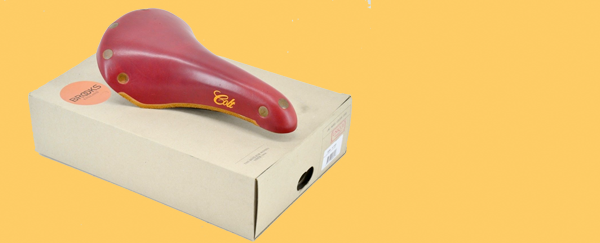
brooks once offered a saddle entitled the colt, a leather saddle which fulfilled the usual form factor, and required the periodic tensioning of the leather top during the breaking-in process. expecting the review model to ride like a concrete coal-bunker for the first few weeks, you can imagine my surprise (and disappointment) to find unbridled comfort right from the start. perhaps such immediate solace mitigated against brooks' hard won reputation, for the colt saddle was subsequntly discontinued and is no longer available.
today's diatribe was unsuspectingly promulgated by ad hoc conversations between guardian newspaper correspondent, nick hopkins (not the recently deceased keyboard player responsible for the piano solo on the album version of derek and the dominoes' layla) and prince harry, while en-route to kyiv in ukraine to visit with injured service personnel (monday 15 septembeer issue). for reasons not entirely clear, he admitted to a dislike of cycling due to a self-professed 'bony-ass'. i'm not one to cast unwarranted disparagement to the four winds, but it would take only brief appraisal of the start line of any international bike race, to observe that the pinnacle of the sport are also in possession of bony-asses, carefully honed over years of training and racing, yet ameliorated by having chosen particularly suitable saddles.
britain's royal family has never been renowned for its collective intellectual prowess, and rarely professing an inherent perspicacity to conceal that particular trait. but, in the likelihood that prince harry at least, as patron of the invictus games, has access to expert coaching advice, should he not have been aware that there are saddles specifically curated to alleviate his alleged problem, or that riding a few kilometres on a regular basis would be likely to render his complaint, if not null and void, of less prominence?
it must be of great concern to brooks saddles to learn that they are unlikely ever to receive the royal ass-ent.
tuesday 16 september 2025
..........................................................................................................................................................................................................