
..........................................................................................................................................................................................................
conspiracy theory
an acquaintance of mine has long seemed to delight in conspiracy theories, to the point where i think he actually goes looking for them in otherwise innocent situations. even in happenstances that feature apparently logical solutions, he will find some convoluted explanation that points to some means of undermining the normal fabric of society. there's probably a pefectly explicable 'ism' that describes his behaviour, but it constantly reminds me of the epithet, 'just because you're not paranoid, doesn't mean that they're not out to get you.' but it now concerns me that i might be heading in a similar direction.
if you can cast your minds back to saturday's monologue, you may recall that i pointed out that it was no coincidence that machine-built wheels relied predominantly on straight-pull spokes, because it was far easier to design machinery that could pop these into a slotted hub, than to deal with the traditional 'j' bend stainless spoke. in the case of the latter, it is common practice to fit a handful of spokes through the hub flange, before pulling them straight, ready to fix into the spoke nipples at the rim. easy as it is for you and i, it's quite a sophisticated process to mechanise.
similar to the increased number of e-bikes on the market from non-tradtitional cycle purveyors,it has obviously proved profitable for a whole slew of manufacturers to enter the wheel market, churning out deep-rimmed wheelsets built in factories and not necessarily by human hand. i am very much not an expert on such matters by any manner of means, but i harbour a sneaking suspicion that the dramatic increase in the market for such components might well be based on us being sold a product that's reasonably simple to build, as opposed to expertly hand-built. wheels from the likes of derek mclay at wheelsmith or pete matthews, for example. in the case of the latter, these are simply individuals with impressive skills, but little marketing capital, as opposed to the likes of enve, mavic, campagnolo and roval, who can presumably produce a wheelset more economically and market them internationally.
if i might cite my traditional hobby horse, the bottom bracket, when i was a kid, the square-taper bottom bracket fitted to my raleigh shopping bike featured individual quarter-inch bearings. eventually, the bearings would wear, causing lateral play in the crankset. beyond a certain point, it was possible to adjust the bearing cups and remove the play, but ultimately, those bearings would have to be replaced. eventually, however, bearing races, holding fewer quarter-inch bearings, were substituted for the loose bearings, because it was easier to drop those into the bearing cups than to painstakingly insert the loose variety, thus improving the production process.
the problem here was that of corrosion; eventually those bearing races would rust and disintegrate, fouling the bearings of which there were insufficient numbers to fill the gaps. so ultimately arrived the cartridge bearing, considerably less likely to corrode, and featuring seals on both sides to retain the grease and prolong the life of the bearings. however, the latter were now considerably smaller than those they replaced, having to fit into the same space vacated by the original quarter-inch steel bearings. and not only that, the existence of the seals and the internal races incurred greater friction; minimal, but present nonetheless.
again, marketing convinced us that cartridge bearings were the bees knees. self-included, i think we fell for it, hook, line and sinker. but viewed dispassionately, fitting cartridge bearings to cycle components could be achieved relatively simply by machine. so, it is eminently possible that the state-of-the-art bicycles that you and i lust after, or have the good fortune to own and ride, may be the result of factors that lean more heavily in the manufacturers' favour, than in ours.
and now that i've started the ball rolling, i'm sure there are many other aspects of the modern bicycle you can think of that might not be the revelations they purport to be. but it would be naive to think that only the bicycle industry operates in this manner. you surely don't think that the inability to replace a simple headlight bulb on a modern-day car is the result of progress in favour of the owner? with almost the entire manufacturing process of the motor car now mechanised, it's a great deal easier for a robot to slot a headlight unit into the bodywork, than attempt to screw in a bulb. and it is very much to the manufacturers' benefit to sell a replacement unit for several hundred pounds, than a simple light bulb for five.
now it's just a case of trying to imagine what a cutting-edge road bicycle would look and ride like, if the customer was truly king.
the truth is out there. probably.
monday 6 april 2026
 ..........................................................................................................................................................................................................
things can only get better
unexpectedly, i found myself with a day off on good friday, the start of easter weekend. since i rarely get or take holidays, the thought of being let off the leash for a couple of days (it turns out i have monday off too) simply hadn't occurred. of course, it could never be quite that straightforward; in a production week, as was last week, there are certain things that have to be done at certain times, invariably by yours truly, so my day off was more a partial holiday than entire, but welcome nonetheless. and, in a situation that almost every cyclist will recognise, having cycled to debbie's in pouring rain and returned in less precipitous conditions, the minute i was showered and changed, the rain ended, the clouds cleared and we were regaled by a sunny afternoon (if not quite the lazy affair as espoused by the kinks' ray davies).
actually, in retrospect, it may actually have fulfilled that desire as, having bought my daily paper, i sat down to read of world affairs while listening to albums from my modest vinyl collection, predominantly at the behest of miles davis, beginning with the 1967 release, nefertiti. though this will mean little to the majority, the drummer on the latter album was the (literally) inimitable, tony williams, whose cymbal work with miles has gained almost universal approbation from jazz drummers the world over. i actually own a ufip ride cymbal with two rivets that i bought because it specifically reminded me of the ride employed on nefertiti and four and more. sadly, i am bereft of williams' innate ability to sound quite so compelling.
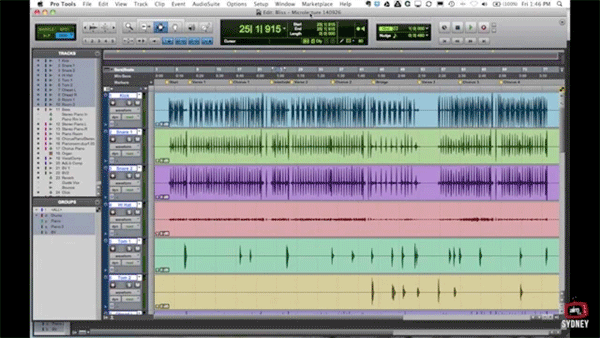
however, the album mentioned above was recorded in 1967 (released in 1968) at columbia's 30th street studio in new york city, probably on four track tape (the beatles/emi/apple didn't move to eight track until 1969/1970) and well before the advent of four track, pro-tools digital recording released in 1991. while none of this bears any specific relevance to cycling, the progress does, in my humble opinion, bear some resemblance.
music recording in the 1960s was somewhat rudimentary in comparison to modern day techniques. though the large studios have been in demise since early this century, replaced by the ability to record at home on highly sophisticated software that can run even on one of the relatively limited mac neo laptops. apple even provides multi-track recording via its garageband software installed free of charge on pretty much all its various hardware. this means, for example, that every drum and cymbal in a modern drumset can be provided with its own microphone, allowing the musician, producer or engineer, to isolate each component of a drumset and alter an almost infinite number of parameters in the search for the perfect sound.
in many cases this has strayed further and further away from the notion that a drumset is a single instrument and not a multitude of individual sounds. one of the objections i have to electronic drumsets is the isolation of each drum; on my five-piece drumset, when i play one drum, the others resonate in sympathy to a greater or lesser degree. damping drumheads, as is common nowadays, and recording each separately, again, in my opinion, has not improved matters one whit. as i write these particular sentences, i'm listening to miles davis' classic kind of blue, released in 1959 and currently the best selling jazz album of all time. when recorded, at best, there were two microphones allocated to jummy cobb's drumset: one for the bass drum and one to capture the rest of the kit. the album presents and identifiable drum sound, one that closely resembles that of my own bop kit when similarly tuned. in other words, it recreates just what a real drumset actually sounds like, if you're sat in the same room.
multi-track digital recording, though undoubtedly more versatile and undeniably cheaper, is, to my ears at least, not an improvement. and i believe there's a comparison to be made with today's state-of-the-art carbon fibre machinery.
this admittedly idiosyncratic connection was inspired by a response to a question posed in the comic as a result of tadej pogacar having allegedly won milan-sanremo aboard a cracked colnago frame and with a rear disc rotor rubbing on the caliper. in the crash that preceded the last few kilometres of the race, pogacar re-mounted his bike and headed towards the affray led by tom pidcock. wout van aert was also involved in the fracas, but was able to change his bike, explaining in part why he finished in third place, four seconds behind the leading twosome. the responses published in this week's cycling weekly ranged from pointing out that this was hardly good news for second-placed pidcock, to the observation that such a happenstance would not have occurred had pogacar been riding a steel or aluminium frame.
you can perhaps see the gist of my lamely made point.
every world tour team in 2026 can be found riding carbon fibre frames and components, even when comparable metal instances could actually prove lighter or stronger. like it or not, contemporary cycling is built on carbon fibre from the ground up, reputedly on the basis that this is expressly what the customer demands. i think we're all sufficiently well-informed to recognise that this state of affairs exists purely because the average roadie, of either sex, tends to want what the professionals ride; it's the very essence of sponsorship. as one wise man was quoted as saying, "never ask a professional rider for advice on a cycle purchase." they simply ride that which is provided, and have to like it because the sponsor says they do. unfortunately most of us are so impressionable, that we want what they have (or as close as we can afford) on the basis that the pros only ride the very best.
that is possibly true, but if the bike sponsor of any of the top teams were to decide that steel was the way forward, and needed to market that contention, it would not be a surprise to find tadej aboard a lugged steel colnago arabesque. quite possibly, he'd still leave the opposition trailing in his wake, but that's hardly the point. just because carbon fibre framesets exist, doesn't necessarily mean that they're the best of the best. a bit like modern-day wheelsets which feature straight-pull spokes, a compromise because machines find it tricky to deal with the traditional 'j'-bend stainless spokes. it doesn't mean that miraculously, it has been discovered that straight-pull are the bee's knees. and though i'd be reluctant to be quoted, because every manufacturer's top level offerings are fashioned from carbon, it doesn't follow that it's the best material for the job, simply the most cost-effective (ie, profitable) to make.
of course, in making that dubious point, i realise that it may be the opposite way round from digital recording, which is undoubtedly cheaper than that of the 1950s and 60s, but i'm sure you catch my drift. as i listen to a live recording of art blakey and the jazz messengers in japan, recorded in 1961, i wonder how it was possible to capture such pristine sounds with equipment that would likely be laughed at by today's sound engineers?
not all alleged progress fulfils the definition of that word.
listen to revival: live at pookie's pub by elvin jones, recorded on a portable reel-to-reel machine in a new york pub in 1967, and explain why today's live and reputedly more sophisticated recordings of any genre of music can scarce compare?
saturday 4 april 2026
..........................................................................................................................................................................................................rotational force
in the early 1990s, i inadvertently discovered that i was rather good at wheelbuilding, when i built a pair for my first 'proper' road bike. in mitigation, the company which supplied me with spokes and rims was happy to calculate the spoke length based on the campagnolo chorus hubs that formed the mainstay of my intended constructs. somewhere or other, i still possess a wheel-building book written for dtswiss by gerd schraner, a book currently listed on amazon for the princely sum of more than £66. the 1990s version was substantially cheaper than that. i did also own a copy of barnett's bicycle manual, a particularly expensive tome that provided detailed instructions on how to build bicycle wheels.
however, the barnett method required that the builder lace one side, before flipping the rim over and starting the next. those with experience of wheel-building will be aware that one of the principal objectives was to end up with the valve stem between two vertical spokes and not between spokes that crossed each other. the downside to barnett's instructions was that, no matter how much attention i paid at the lacing stage, there was a greater than evens chance that i would end up with the valve hole in the wrong position. gerd schraner's method relied on lacing both sides simultaneously, meaning it was simples to ensure the valve hole was in the correct place from the outset. of course, if i ever found myself in the fortunate position of having to build more than two sets of wheels at a time, familiarity bred content.
i need hardly point out that building more than two sets of wheels per year was rare to the point of non-existence. which is precisely why my reliance on mr schraner was more or less permanent.
with boundless, yet naive enthusiasm, i even went so far as to advertise my wheelbuilding proclivities in a couple of cycling magazines, and it was probably only due to good fortune that i never actually engaged a single customer. for one, i had no liability insurance were it to be discovered that my skills were not as proficient as i believed them to be. component supply was less of a problem, but despatch would have likely tripped up the whole venture, as it is inevitably more expensive to ship anything from a scottish island than it is from pretty much any location on the mainland. but the disadvantages didn't end there.
during my review years on the washingmachinepost, i was contacted by a professional wheelbuilder who offered to build a pair of wheels based entirely on my weight, cycling ability, make of bicycle and intended use. the wheels subsequently sent for review were highly effective, though lacking somewhat in aesthetic properties. however, one of the conditions attached to this particular wheelset, was that they be returned following the review period; not uncommon with review items, but i did wonder what they were going to do with a set of wheels that had supposedly been specifically built for my reputably unique properties. had i fallen victim to marketing hyperbole? had i actually been sent just another set of standard wheels?
you see, i could apparently build wheels that survived the slings and arrows of any incumbent road or mountain bike rider, but in truth, these were very much of the one-size-fits-all variety. nowadays, matters are apparently substantially different, presumably for the good of all, but not necessarily for any attendant bank balance.
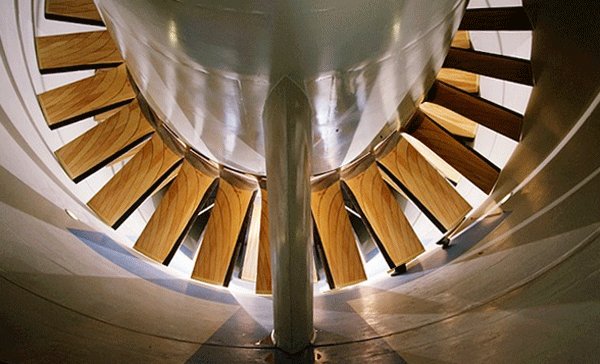
a press release i received only the other day regarding a pair of wheels soon to be released to the general cycling public, highlighted just how different things are today. these encompassed parameters probably not even considered by gerd schraner, amounting to a five step development process. this consists of (reputedly) computational fluid dynamics, wheel-only wind tunnel testing, wheel plus bike wind tunnel testing, wheel plus pedalling rider wind tunnel testing, and real-world sensor-based, validation. my friend, derek mclay, of wheelsmith in scotland's cairngorms, builds some of the finest wheels known to mankind, but i'm pretty sure there's not a wind tunnel in a shed at the bottom of his garden.
it is eminently possible that the five criteria influencing this soon to be released wheelset has resulted in a superior set of wheels, but surely the question we ought to ask ourselves before considering purchase, is how good do they need to be? having ridden many reputedly state-of-the-art wheels over the years, i have little real faith in the benefits of wind-tunnel testing, having been blown from one side of the road to the other on wheels that have been supposedly fabricated to prevent that very situation. and given that, to gain full advantage from a deep, carbon-rimmed, aerodynamic wheelset, the rider ought to be travelling at least 33 kilometres per hour, well do i know that is a velocity at which i would struggle to maintain other than downhill in a galeforce tailwind.
and though i may be an ageing cyclist, i tend to think i'm not alone.
of course, if we are truly as aware as we'd like to think we are, the fact that the majority of high-end bicycles and components are designed and built for the professional classes, yet marketed to the great unwashed, ought to be glaringly obvious. and, admit it or not, professional standard velocipedinal niceties, no matter what the marketing departments say, are not necessarily the stuff of which dream are made. it's nice to know that our cycling desires are so enthusiastically catered for by some, but reality bites when you can admit that, to quote from the film, wayne's world, 'we are not worthy'.
friday 3 april 2026
..........................................................................................................................................................................................................a change is as good as a bad idea
in 1891, willie campbell created an 18-hole links golf course at machrie on islay along with an adjacent hotel. nowadays, those are situated between the village of port ellen and the international airport at glenegedale. following campbell's initiation of golf on islay, the newly designed course officially opened in 1883, hosting a match between campbell and open golf champion, willie fernie. the hotel, meanwhile, was converted from a simple farmhouse, undergoing several transformations during the 20th century, including a forced change in the 1970s, when a local farmer reclaimed some original land.
when i first moved to the island in 1987, the hotel was owned by murdo macpherson, a fellow who was a bit of a character, and made for a slightly eccentric mine host. the hotel's dining room had been converted from the original cattle-byre, retaining the individual stalls which featured as low, tactile walls between tables. the internal layout was almost as eccentric as the inimitable mr macpherson, as proved by the less than direct corridor leading from reception to the simple function room at the rear. murdo sold up in the 1990s, a euphemism for apparently having made a midnight flit due to impending insolvency.
it was taken over by an investor based in the isle of man, who failed to make any notable improvements, and ultimately the machrie hotel once again, in 2010, entered administration. after many a rumour about high profile purchasers, including glasgow rangers football club, it was eventually purchased in 2011 by so-called power-couple, gavyn davies and baroness sue nye. davies' early claim to fame was as chairman of the bbc from 2001 to 2004. under this new ownership, the original frontage was retained, but the building behind was demolished, then extensively remodelled and expanded, creating thoroughly modern accommodation, with apparently little expense spared.
except they seem to have forgotten to include a dedicated function room.
however, despite departing the hotel following staff christmas lunch in 2019, past four helicopters parked on the lawn, the hotel still haemorrhages money, leading to its incorporation into the portfolio of another place, a joint investment vehicle owned by will ashworth, gavyn davies and sue nye. the machrie and the lake in ullswater became two properties under the auspices of another place, along with the watergate bay hotel in cornwall. however, while the first two have been subsumed by the another place banner, the latter appears to have escaped the branding. since becoming a part of the another place brand, the machrie name has been literally minimised; above an image of the hotel, all adverts have been boldly headed another place, while the machrie appears in a far smaller point size.
islay, however, is not a place where such marketing ploys are inclined to work well, particularly when imposed by mainland-based corporations. though ardbeg distillery/glenmorangie have rebranded the former islay hotel as ardbeg house, pretty much everyone refers to it as the islay. and locally, the machrie is still the machrie, with another place ommitted altogether unless invoked for humorous intent. there's a shop in main street which is still referred to as mary woodrow's, the newsagent who moved away from the island decades ago. debbie's hasn't been owned by debbie for many a long year.
omloop het volk originated in 1945 as omloop van vlaanderen. by 1947, it was named after the newspaper initiating the original event, het volk, but in 2009, that newspaper was bought by het nieuwsblad resulting in a re-naming of the event. it was several years before a majority began using the new appellation. now the esteemed gent-wevelgem has been summarily, and essentially unnecessarily, become in flanders fields, entirely because the town of middlekerke has made a deal with race organiser, flanders classics, to have the race start in the town every year until 2036. but, in fact, even gent wevelgem didn't start in gent, having begun in deinze since 2003, and moved to ypres in 2020. the race was founded in 1934, and this is the first name change in 92 years.
we've all become inured to changing standards in headsets and bottom brackets, electrification of gearsets and moving from rim brakes to hydraulic discs. i can scarcewly cope with all that, but just leave the races well alone: paris-roubaix last started in paris in 1966; would you change the name of the oldest race on the calendar, liège-bastogne-liège to anything else? and despite a predilection for starting the three grand tours in different countries every second year, has anyone suggested changing the titles of le tour de france, il giro d'italia and la vuelta?
i certainly hope not.
tuesday 31 march 2026
..........................................................................................................................................................................................................